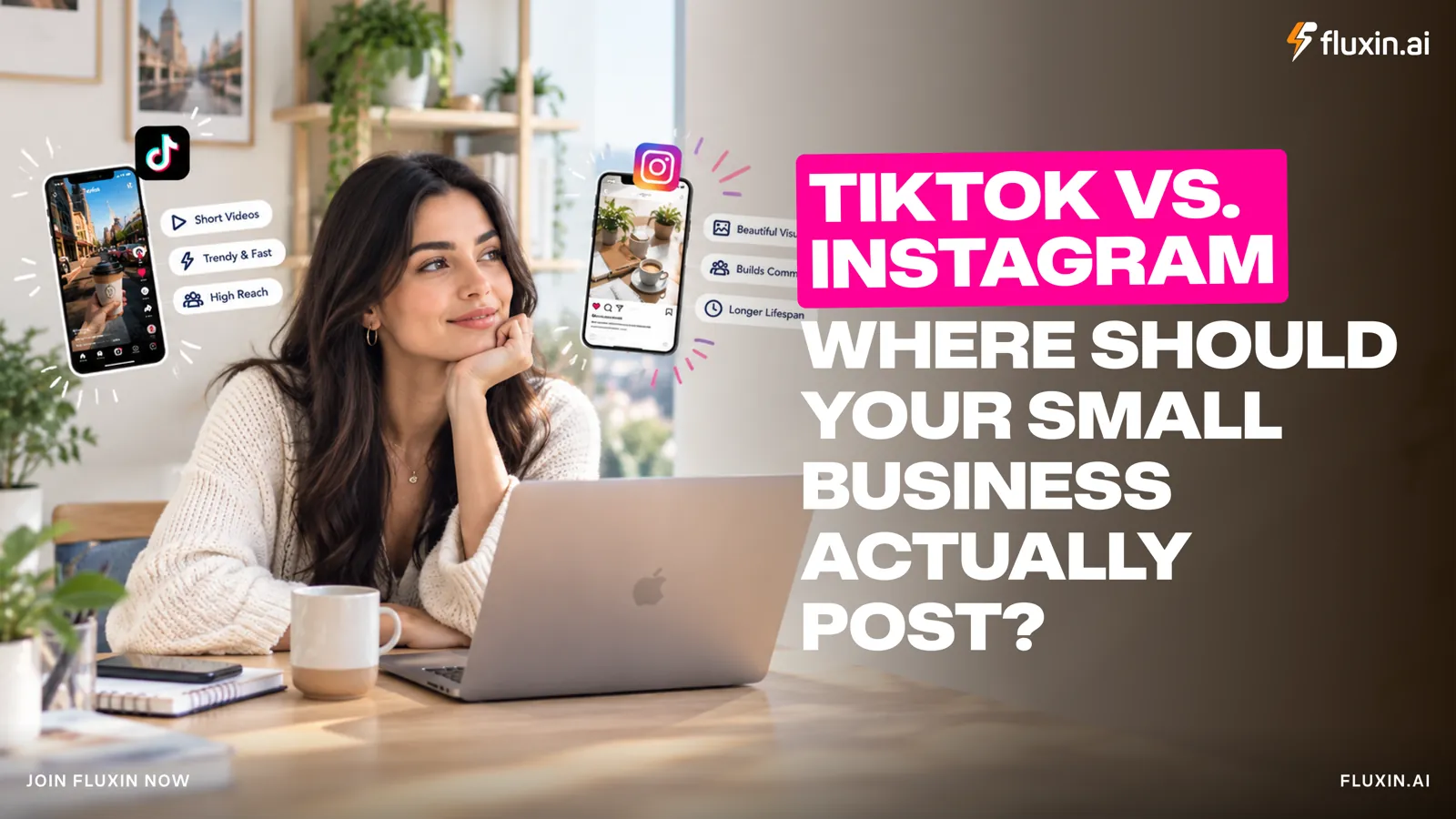
There is no universal winner here. The right platform depends on your audience age and buying habits, and on whether your content works better as raw, native-feeling video or as polished, multi-format posts.
That is not a cop-out answer. It is the actual deciding factor once you look at how differently these two platforms behave. Here is the breakdown.
Who is actually on each platform?
TikTok's core audience skews younger, with a large share of users under 35 and a notably strong teens to mid-20s base. Instagram's audience is broader and older on average, with heavy usage well into the 35 to 54 range. Instagram is also where more people already follow and buy from small businesses, because it has spent years building shopping features directly into the app.
So the first question is not which platform is better. It is which one your customers are already on.
- Lean TikTok if your customers are Gen Z or young millennials and your product is impulse-friendly: fashion, beauty, food, novelty items.
- Lean Instagram if your customers are slightly older, more likely to research before buying, or your business is local and service-based. Contractors, salons, and professional services fit here, and Instagram's location features help.
Where each platform falls short
Being honest about the weaknesses matters more than listing the strengths, since most comparison posts skip this part entirely.
TikTok: discovery decay and unpredictability
A video can perform brilliantly one week and get almost no reach the next, on similar content, because the algorithm favours novelty and trending formats over consistency. That makes TikTok a poor fit when you need predictable, steady reach for something like appointment bookings or a time-sensitive promotion. You might get a viral hit. You might get 40 views. Planning around either is hard.
Instagram: organic reach decline on feed posts
Instagram has pushed hard toward Reels and away from static photo posts, so a small business posting the same style of product photo it posted in 2019 will see meaningfully lower reach today, even when the content is good. There is also more competition per user, because more brands are already established there, which makes it harder for a brand-new account to break through.
More on what Instagram rewards now in maximizing small business growth on Instagram.
Which platform is better for selling directly?
Instagram currently has the more mature commerce infrastructure: shoppable tags, Instagram Shop, and a checkout experience refined over several years. If in-app purchasing matters to your business right now, Instagram is the safer bet today.
TikTok Shop has grown quickly and works well for certain categories, but it is newer and less predictable as a sales channel for a small business without an existing following.
| If you sell | Better bet |
|---|---|
| Considered purchases: higher price, longer research phase | |
| Low-cost, visually simple, trend-adjacent products | Worth testing TikTok Shop |
| Impulse buys, beauty and lifestyle, trend-driven items | Either, TikTok often first |
Can you reuse the same video on both?
The same raw footage works on both. The editing and framing should not be identical. This is the single biggest mistake small businesses make when running both platforms at once.
TikTok rewards content that feels native to it: text overlays in TikTok's own style, quick cuts, on-screen captions, sound trends. A version that looks too polished, or too much like a traditional ad, tends to underperform. Instagram Reels tolerates a more polished look, and Instagram's feed and Stories need different crops and different caption lengths again.
Posting the exact same file with the exact same caption to both usually means one platform gets a version that feels slightly off for its audience.
This is the specific problem Fluxin solves. Cross-platform reformatting builds each version for the format it lands in rather than cross-posting one flat asset, and it drafts the captions per destination so you are reviewing and adjusting rather than re-editing the same clip twice. It does not decide your platform strategy for you. It removes the repetitive editing once you have picked where to focus.
Should you try to do both platforms well?
Trying to run both at full effort from day one usually means doing neither well, especially for a small team with nobody hired specifically for social.
A more realistic sequence:
- Pick one platform as the primary focus, using the audience and commerce questions above.
- Post there consistently for 60 to 90 days.
- Treat the second platform as a lighter cross-post, not an equal effort.
- If the second one starts showing real traction, promote it to a full focus later.
Once the primary platform has a steady rhythm, cross-posting tools earn their place: a reformatted version of what you are already producing goes to the second platform without doubling your production time. The batching workflow is what makes that sustainable, and TikTok publishes straight from Fluxin alongside your other channels.
How do you know when to switch your primary platform?
Look at cost per follower, or engagement, over a full 60 to 90 day window rather than week to week. Both platforms carry enough algorithm variance that a single good or bad week tells you almost nothing.
If one platform is consistently producing inquiries, saves, or shares for meaningfully less effort than the other, that is your signal. Not which platform feels more fun to post on.
Posting time is worth getting right on whichever you pick, and the two platforms peak at different hours. Our 2026 posting-time data covers both.
The bottom line
TikTok and Instagram serve different audience ages, different buying behaviours, and different content styles. Neither is objectively better, and the right call depends on who you are trying to reach.
Once you have picked a primary platform, the cost of testing the second one is mostly editing time, which is the part worth handing off.
See how cross-platform reformatting works, or compare the plans.