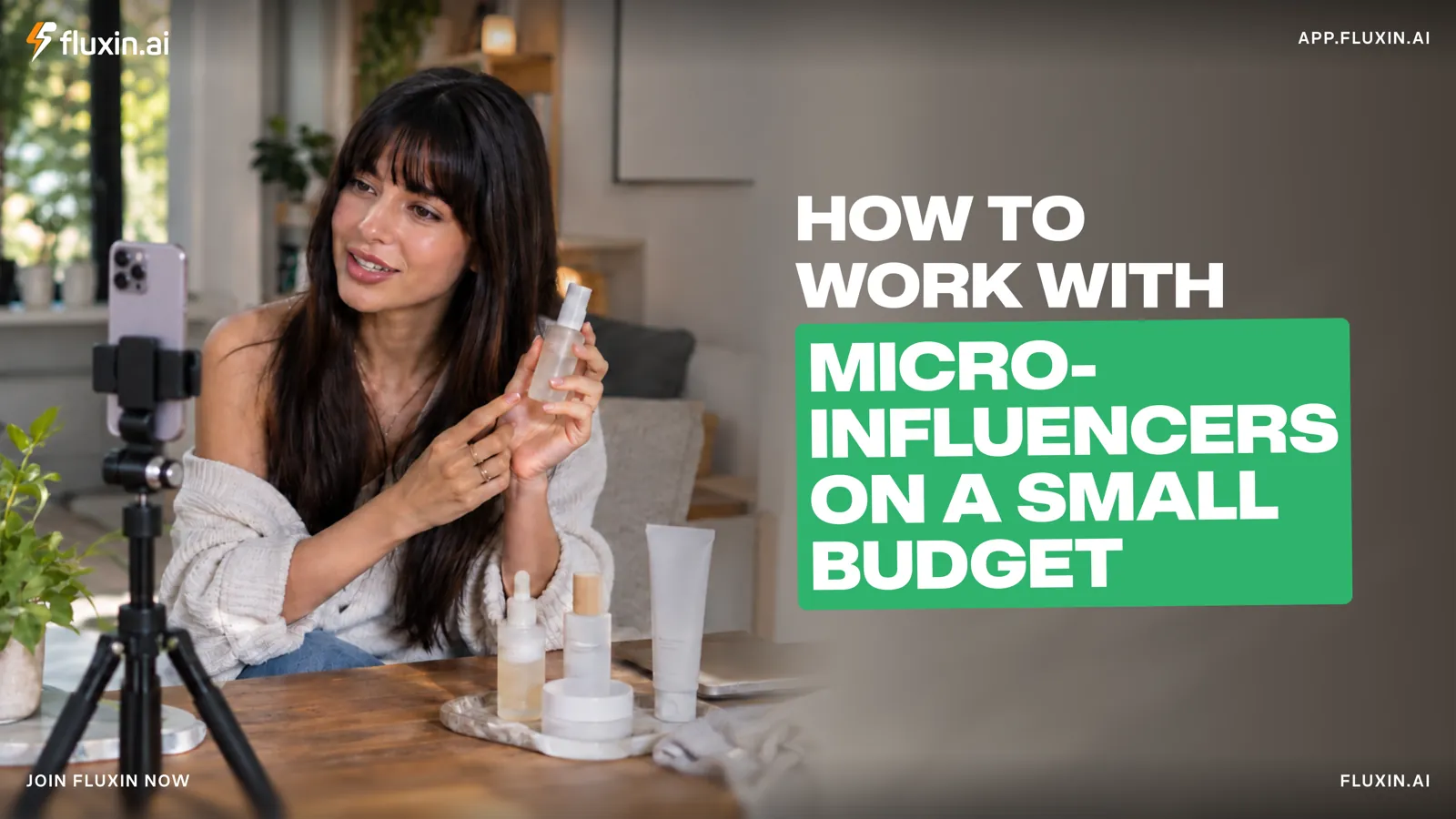
Find small, local creators whose audience already looks like your customers, send a one-page brief, make certain every paid post is clearly labelled as an ad, and give each creator their own discount code so you can see exactly who sent you customers. A small budget is rarely what holds this back. Picking creators by follower count is.
Big-name influencers are expensive and often poor value for a small business. Micro-influencers, commonly described as creators with somewhere between a few thousand and 50,000 followers, tend to fit better. Less reach, but a far higher chance that the people watching are the people you actually want.
Why do micro-influencers often work better for small businesses?
Because reach is not what you are short of. Relevance is.
Smaller audiences tend to be more engaged, more local and more trusting. Imagine a creator with eight thousand followers in your town who replies to every comment, next to one with eight hundred thousand scattered worldwide who has never heard of the place. For a business that serves one area, the smaller account is the more useful one, and it is not close.
They are also more affordable and considerably more flexible. Many will work for free product, a fee, or some mix of the two, and they are usually easier to get hold of. The trade-off is that each one reaches fewer people, so the model is a handful of creators at once rather than one big name carrying the whole campaign.
How do you find the right ones?
Start with the people already in your orbit. Anyone who follows you, buys from you or tags you is a warmer prospect than a stranger you found in a search, because they have already chosen your business once.
After that, search local hashtags and your location tag, look at the accounts your customers tag, and see who is already posting about businesses like yours. When you have a shortlist, check three things on each one.
| Check | How to do it | What should worry you |
|---|---|---|
| Engagement | Add up likes and comments on recent posts and divide by follower count. Do it the same way for every candidate so the numbers compare | A large account where that ratio has collapsed, especially next to a smaller one on your list |
| Fit | Read the comments, not the bio. Do the people talking look like your customers, and are they anywhere near you? | A fitness creator in Leeds will not sell a single pair of glasses for an optician in Surrey |
| Authenticity | Scroll back several months and watch the shape of the growth | Sudden follower spikes, and comments like "nice pic!" from accounts with no posts of their own |
On engagement, compare candidates against each other rather than against a published benchmark. What counts as healthy moves around by platform, niche and audience size, so the ranking of your shortlist tells you more than any threshold will.
A smaller account that is real beats a bigger one that is not.
What should you offer?
Start small and treat the first round as a test. Pick three to five creators and offer each one a trial: free product or service, a modest fee, or a combination.
Rates vary enormously, so ask what they charge rather than guessing, and settle the price before anything is posted. Nobody enjoys that conversation after the fact.
Once the first round is done, look at which creators produced genuine enquiries or sales and go back to those. Ongoing partnerships read more naturally than one-off posts, because the audience sees the same person mentioning you more than once, and creators often quote a better rate to businesses they already enjoy working with.
What should be in the brief?
One page, and no more than one page. It needs to cover:
- Who you are and what the product or service is, in two sentences.
- What you want produced: one Reel, three Stories, or one photo post.
- Two or three points to mention, and anything to steer clear of.
- The deadline, and how you will approve the content before it goes up.
- Disclosure: the post carries a visible ad label.
- Your discount code and link.
Then resist the urge to script the rest. The reason that audience trusts the creator is that the creator sounds like themselves, and heavily directed content reads as an advert and performs like one. That is the same failure as polished content with nothing specific in it, except you have paid somebody else to produce it.
How do you handle disclosure and the law?
If you pay a creator, send them free product, or reward them in any other way, whatever they post has to be labelled as advertising, plainly enough that nobody could miss it. This is not optional and it is not a formality.
In the UK, the ASA and the CMA expect a clear and prominent label, such as "#ad" or the platform's own paid partnership tool, placed where people will actually see it rather than buried at the end of a string of hashtags. In the US, the FTC sets out similar requirements.
Responsibility can land on the creator and on the business, so put the requirement in the brief and check the post yourself before it goes live. This is general guidance, not legal advice, and the rules do get updated, so check the current ASA and CMA guidance or ask your trade body if you are unsure.
How do you measure whether it worked?
Issue each one a unique discount code or tracked link, something like "SAM10", so there is no guessing about who sent which customer. Add one question at checkout or booking, "How did you hear about us?", and between them you will have most of the answer.
Then judge each creator on cost per sale or enquiry rather than on views. A creator who brings you five paying customers has done more for the business than one who brings fifty thousand views and nobody who buys. The same logic applies to everything else you post, which is why measuring results simply matters more than measuring them thoroughly.
Where does Fluxin.ai fit in?
Mostly in getting more out of each post once it exists. A creator post that runs once and disappears is poor value for whatever you paid for it.
With the creator's written permission, you can reuse their content in your own feed, your Stories and your ads. Upload their file to Fluxin.ai and it produces the versions each platform needs and schedules the reposts across the following weeks, so one creator post becomes several without you re-editing anything. It is the same one-sitting approach as batching a month of content, applied to somebody else's footage.
Get that permission in writing before you reuse anything, including for paid ads, which usually needs agreeing separately. Credit the creator every time.
See how Fluxin.ai reformats and schedules one piece of content across every channel, or compare the plans.